Software built next to the people using it.
We work close to the operation — the manager, the coordinator, the person actually doing the job — and build systems that hold up under scrutiny.
How we work
Close to the work
We build with a small number of users, in the open, and change things weekly based on what they tell us. Nothing ships because it looked good on a roadmap.
Built for the messy middle
Regulated work is full of things that don't fit neatly into software — exceptions, judgement calls, the way a place actually runs versus how it's written down. That's the part we design for.
Intelligence where it earns its place
We use automation where it removes work, not where it makes a demo look impressive. If a system can't explain what it did, it doesn't belong in a regulated environment.
Our first product
Staffing and compliance for care homes
Walk into an inspection knowing your rota holds up. Virtle keeps staffing and compliance in one system, so when someone asks you to evidence it, the answer is a screen, not a filing cabinet.
Early access, open to a small number of homes.
The problem
The information exists. It's just everywhere.
A spreadsheet for the rota. A folder for DBS certificates. A training log someone updates when they get a minute. The same three details typed into all of them.
Nothing is watching the dates
Enhanced DBS checks and mandatory training lapse quietly. You find out when somebody asks to see them, and by then it's already a finding.
6am, and someone's off sick
You're working out from memory who's trained, who's already near their hours, and who you can call without tipping into agency spend you'll have to justify later.
What Virtle does
One record, entered once
Staff details, qualifications, DBS status and training live in the same place the rota is built from. No re-typing the same person into three systems.
The rota respects compliance
If someone's training or DBS has lapsed, you know before you publish — not when an inspector asks.
Cover, faster
When a shift falls through, see who's genuinely available, qualified and within their hours, then send the message from the same screen.
Evidence, ready
Planned against actual. Who was on, who was qualified, what was covered. The report exists because the system built it, not because somebody assembled it on a Sunday night.
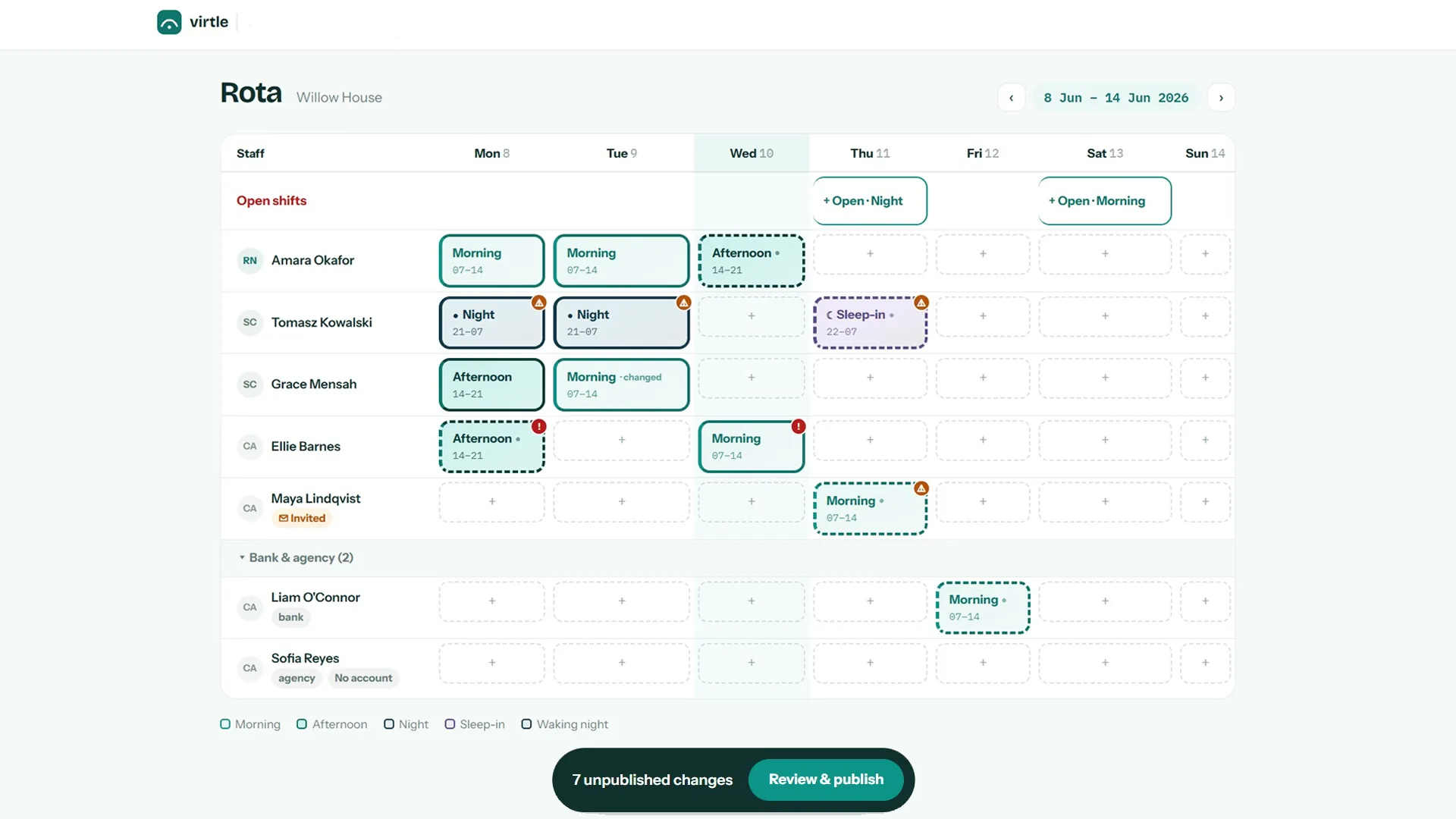
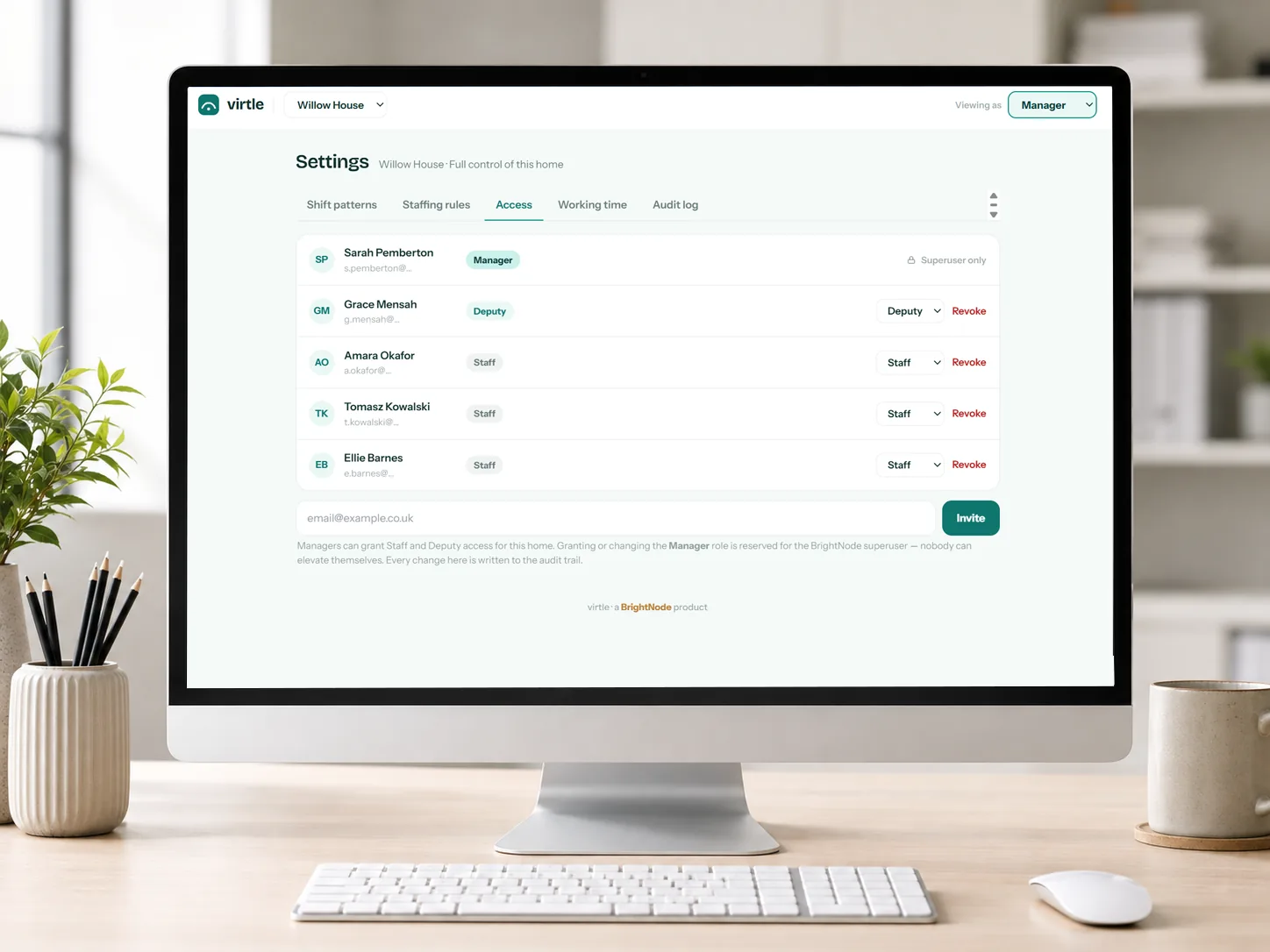
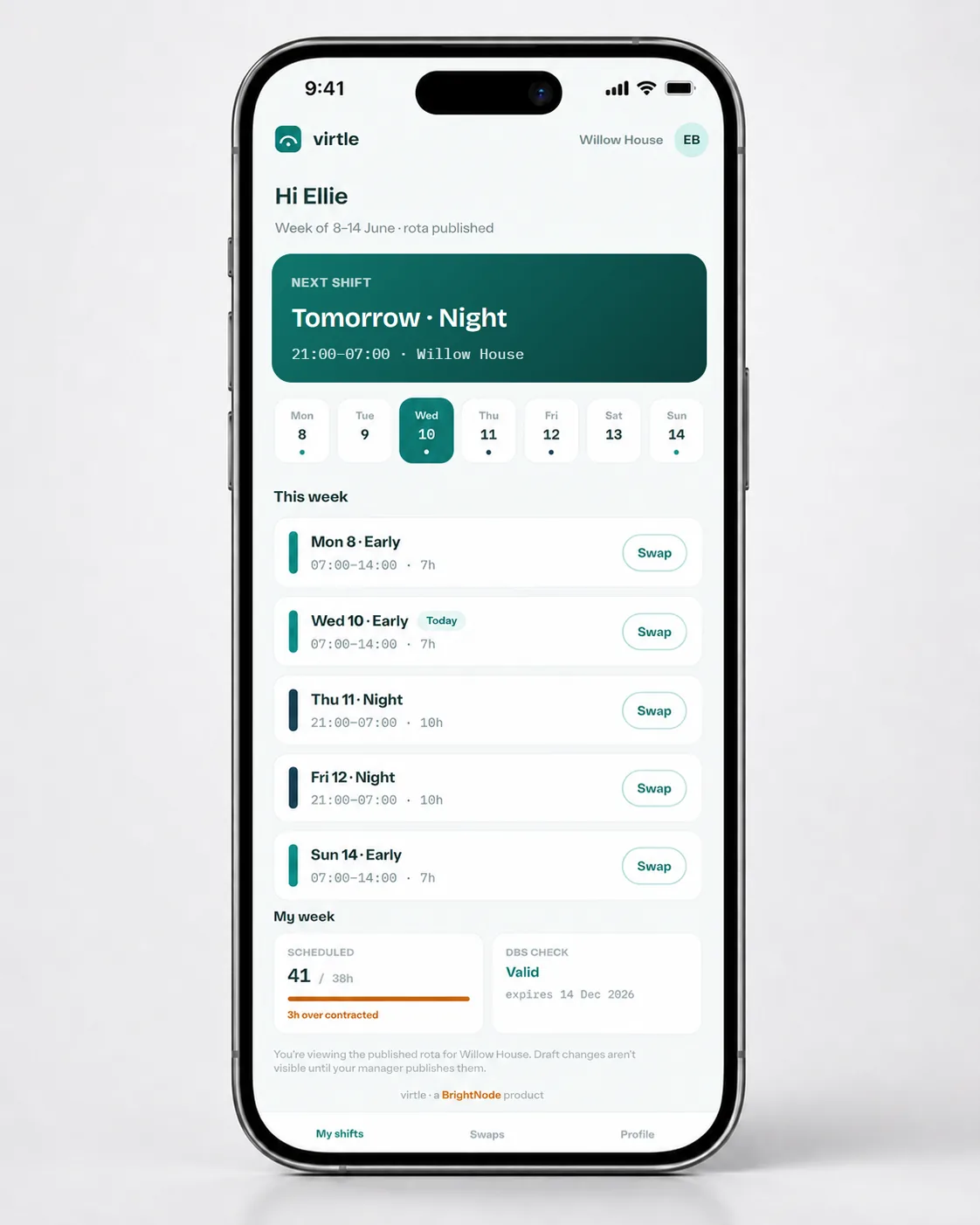
An early preview. Virtle is being built with a small number of homes and changes most weeks based on what they tell us.
Why Virtle
Software that grows with you
Most care software makes you choose. Enterprise platforms are configured over months and priced for scale, so a smaller home can't justify them. The affordable tools are generic scheduling — they don't know what a DBS check is, can't tell whether tonight's shift has someone qualified to administer medication, and never touch your compliance records.
Virtle is built to be running in an afternoon at a single home, and to keep working when you're running five. Same system, same data, no migration project when you grow.
Built around the part that keeps you up at night
Not rotas for their own sake. Being able to show, on any given day, that everyone on shift should be there — and having the evidence already assembled when someone asks for it.
Built with homes, not just for them
Virtle is early, and that's the point. It's being shaped by a small number of homes, and the person building it is the person who answers the phone.
Who it's for
Independent residential care homes across the UK, and small groups running a handful of sites.
If you're managing several homes and reconciling rotas between them, that's exactly the problem I want to hear about.
If you already use a care records system, Virtle sits alongside it. This is the staffing side — your care planning stays where it is.

Who's building this
I started out head office for a care group running three homes — HR, accounts, assets, IT contracts. I was on the receiving end when we commissioned software, and I saw how much frustration in this sector comes from tools built by people who've never run a home.
Then two years at a web agency, building interfaces for brands who care how things look and feel.
Now I build enterprise software used by thousands of people daily, where reliability and scale aren't optional.
Managers aren't short of software. They're short of time, and worried about inspections.
What happens next
- 1
You email
No form, no demo request routed to a sales team.
- 2
Twenty minutes
About how you run your rota now and what actually goes wrong. I want to hear where I've got this wrong.
- 3
Early access, and a direct line
If it's a fit, you get it early and you shape what gets built next.
Tell me how you run your rota.
I'm looking for a handful of homes to build this properly with. Not a sales call — a conversation with the person writing the software.
hello@brightnode.uk